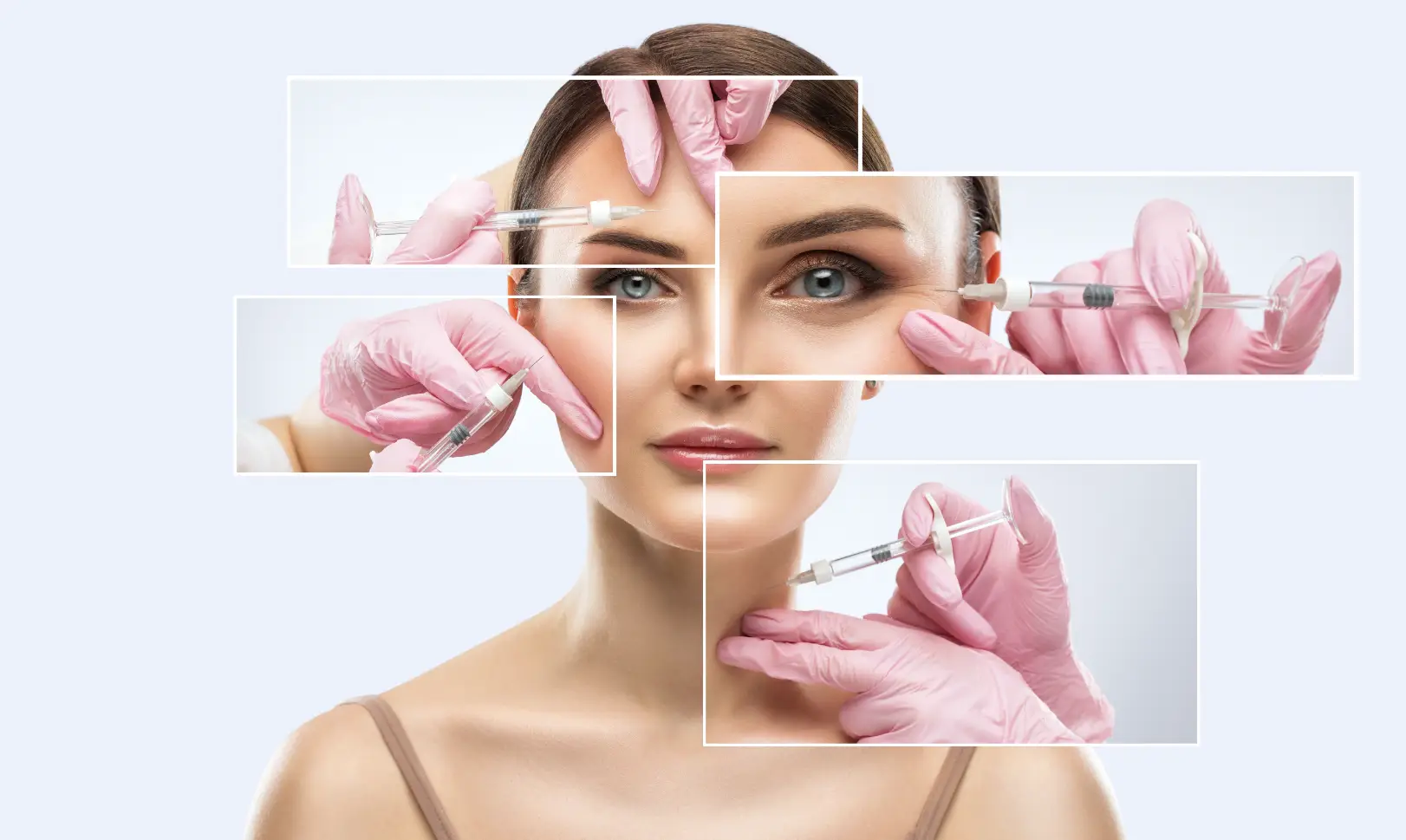
There was a time when cosmetic injectables were much easier to spot. Cheeks could look unusually round, lips noticeably inflated, and foreheads so smooth that natural expression seemed to disappear. The problem wasn’t necessarily Botox or dermal filler itself. Much of it came down to how these products were being used.
A decade of aesthetic medicine has changed that conversation. Today, advanced injection planning looks beyond an isolated wrinkle or hollow and considers how the face moves and ages as a whole. That philosophy is central to Dr. Prieto’s approach at Privvy Modern Health, where she personally performs filler and neuromodulator injections rather than treating aesthetics as a one-feature-at-a-time process.
So, why do patients treated today often look different from those treated 10 years ago? Keep reading as we explore the history of cosmetic injectables, the rise of pillow face, and why anatomy and injector judgment now matter as much as the product inside the syringe.
The Injectable Era Has Changed
Aesthetic medicine hasn’t simply gained more products over the years. The bigger evolution has been learning how to use them with a more complete understanding of facial anatomy, movement, proportion, and aging.
From Chasing Lines to Reading Faces
Earlier injectable trends often focused heavily on individual features. See a wrinkle, inject it. See a hollow, fill it. Want larger cheeks or lips, add more volume. That approach sounds logical until you remember that the face isn’t a collection of unrelated parts.
Your cheek affects how the midface transitions toward the lower eyelid, while changes through the midface can influence folds farther down. Muscles also create expressions across interconnected regions rather than operating as isolated switches. Modern facial anatomy injectable technique takes those relationships into account.
Dr. Prieto approaches the face as an interconnected structure rather than a checklist of wrinkles. The question isn’t simply, “Where can we inject?” It’s also, “Why does this area look different now?” Sometimes a visible line is primarily related to repeated muscle activity. Another concern may come from lost volume, while skin laxity, bone changes, shifting fat compartments, or declining collagen may play a larger role elsewhere.
The better you understand the cause, the less likely you are to treat every aging concern with more filler. That change in thinking has helped move cosmetic injectables toward more individualized and natural-looking outcomes.
The Rise of “Pillow Face”
The term “pillow face” isn’t a medical diagnosis. It’s an informal description of an overfilled appearance in which facial contours can look unusually puffy, rounded, or heavy, and it became closely associated with an era of aggressive volume restoration.
More filler was sometimes viewed as the obvious answer to facial aging. If cheeks flattened, they were filled. If folds remained, more product might be added. Lips could also be repeatedly augmented without stepping back to consider whether their proportions still complemented the rest of the face. Eventually, volume could become the thing people noticed first.
That’s the opposite of what many patients want today. Learning how to avoid pillow face begins with recognizing that not every sign of aging represents a volume deficit. Loose skin doesn’t automatically need filler, and a wrinkle isn’t necessarily asking to be filled from underneath.
Dr. Prieto’s approach reflects that shift toward selectivity. Treatment can begin with understanding the patient’s anatomy and goals rather than recommending something simply because it’s popular. Sometimes the most sophisticated injection decision is deciding that an area doesn’t need another injection.
Botox Became Less About “Freezing”
Neuromodulators have gone through their own evolution. Botox works by temporarily reducing targeted muscle activity and can be used for dynamic wrinkles such as forehead lines, frown lines, and crow’s feet.
The basic concept hasn’t changed, but injection philosophy has. Older aesthetic stereotypes often revolved around the completely motionless forehead, where smoothness became the objective without enough consideration for how much expression should remain.
Today’s natural Botox results can take a more individualized approach. Dr. Prieto can consider how a particular patient’s muscles move rather than treating everyone according to the same injection map. Two patients of the same age may raise their eyebrows differently, frown with different strength, or rely on particular muscles differently when expressing themselves.
That means the same injection pattern isn’t automatically right for both people. A refreshed face can still move, and someone should still be able to laugh at dinner or raise an eyebrow during a conversation without feeling disconnected from their own expressions.
Filler Became More Strategic
Dermal filler has experienced a similar philosophical shift. The objective isn’t simply adding fullness wherever age has created a visible change.
JUVÉDERM and Restylane include hyaluronic acid fillers that can restore volume in selected facial areas. Privvy Modern Health also offers Radiesse, which uses calcium hydroxylapatite microspheres in a gel carrier and can provide immediate correction while supporting collagen production over time.
Having several products creates more possibilities, but it also makes clinical judgment more important. Dr. Prieto considers the patient’s anatomy, skin characteristics, goals, and the type of correction needed before determining whether filler makes sense.
That’s an important part of the filler technique evolution. The conversation has gradually shifted away from “Which filler do you want?” toward “What are we actually trying to improve?” Those questions may sound similar, but they can lead to very different treatment plans and results.
We Understand Facial Fat Differently
A youthful face isn’t simply a face with more fat. Facial fat is organized into compartments, and those compartments can change differently as we age. Some lose volume, while other tissues descend or become more noticeable relative to the surrounding structures.
Bone, ligaments, muscles, collagen, and skin also change over time. That’s why facial aging can’t always be corrected by simply putting volume back wherever a hollow or fold appears.
This helps explain why fillers look unnatural in some patients. If every aging change is interpreted as missing volume, the face can become progressively fuller without necessarily looking younger.
Dr. Prieto’s anatomical approach instead considers where structural support has actually changed. One patient may benefit from carefully restoring cheek volume, while another may need very little filler because skin quality or laxity is playing a bigger role.
Natural treatment isn’t about using the smallest amount possible at all costs. It’s about putting an appropriate amount in an appropriate area for a clear reason.
Movement Became Part of the Plan
Take a selfie with your face completely relaxed and you’re looking at only one version of yourself. Smile, talk, laugh, squint, or raise your eyebrows, and suddenly you’re seeing the face everyone else encounters throughout the day.
Modern injectable planning increasingly accounts for that movement. A technically smooth result at rest can still look unnatural during conversation if treatment hasn’t respected how muscles and soft tissues interact.
This is especially important around expressive areas. Dr. Prieto’s approach to neuromodulators isn’t simply about erasing every possible line. The objective can be subtle improvement while maintaining enough movement for the face to continue looking familiar.
The same thinking matters with filler. Lips need to speak and smile, cheeks change shape when you laugh, and the lower face moves constantly throughout the day. The face isn’t meant to look perfect in a still photograph. It’s meant to look like you while you’re living in it.
Different Fillers Can Do Different Jobs
Another major advancement has been moving away from the idea that “filler is filler.” Different formulations have different properties, approved uses, textures, and behaviors in tissue, so product selection becomes part of treatment strategy rather than simply a brand preference.
At Privvy Modern Health, Dr. Prieto works with filler options including JUVÉDERM®, Restylane®, and Radiesse®. These products can address concerns such as lost facial volume, wrinkles, lip enhancement, and facial contours depending on the individual patient’s needs.
JUVÉDERM and Restylane include hyaluronic acid-based fillers, while Radiesse uses calcium hydroxylapatite. Those differences matter because the goal isn’t to make one product perform every possible job.
Dr. Prieto can consider the tissue being treated, the desired correction, facial anatomy, and the patient’s overall aesthetic plan. This is where injector skill vs. product results becomes particularly important. The brand printed on the syringe matters, but what happens after that syringe is opened matters just as much.
Restraint Became a Skill
One of the most meaningful changes in injectables can’t be measured in milliliters. It’s the growing emphasis on knowing when enough is enough.
A patient may arrive convinced they need more cheek filler because that’s what they’ve seen online. Another might want every forehead line gone, while someone else may bring a celebrity photograph and ask for those exact lips. Dr. Prieto’s role isn’t simply to fulfill an order. It’s to consider whether that request makes anatomical and aesthetic sense for the individual face.
That’s where natural-looking filler results often begin. More volume isn’t automatically more youthful, and eliminating every visible line isn’t necessarily more attractive. Sometimes maintaining a small hollow preserves character, while leaving controlled forehead movement can keep expressions warm.
Natural aesthetics leaves room for a person to still look human. Dr. Prieto’s approach places that individuality ahead of trying to reproduce whatever injectable trend happens to be popular at the moment.

Better Results Start With Better Judgment
Cosmetic injectables have come a long way from the days when more volume and less movement were automatically equated with a younger appearance. Today’s natural-looking filler results depend on anatomy, thoughtful product selection, respect for facial movement, and knowing when another syringe would take treatment in the wrong direction.
At Privvy Modern Health in Chico, CA, Dr. Prieto personally brings that physician-led perspective to filler and neuromodulator treatments. Rather than chasing trends or treating one feature in isolation, the focus stays on facial balance and individualized planning, because the most compelling result isn’t a completely different face. It’s still you, simply refreshed in a way that feels believable.
Call us today to book your consultation!