


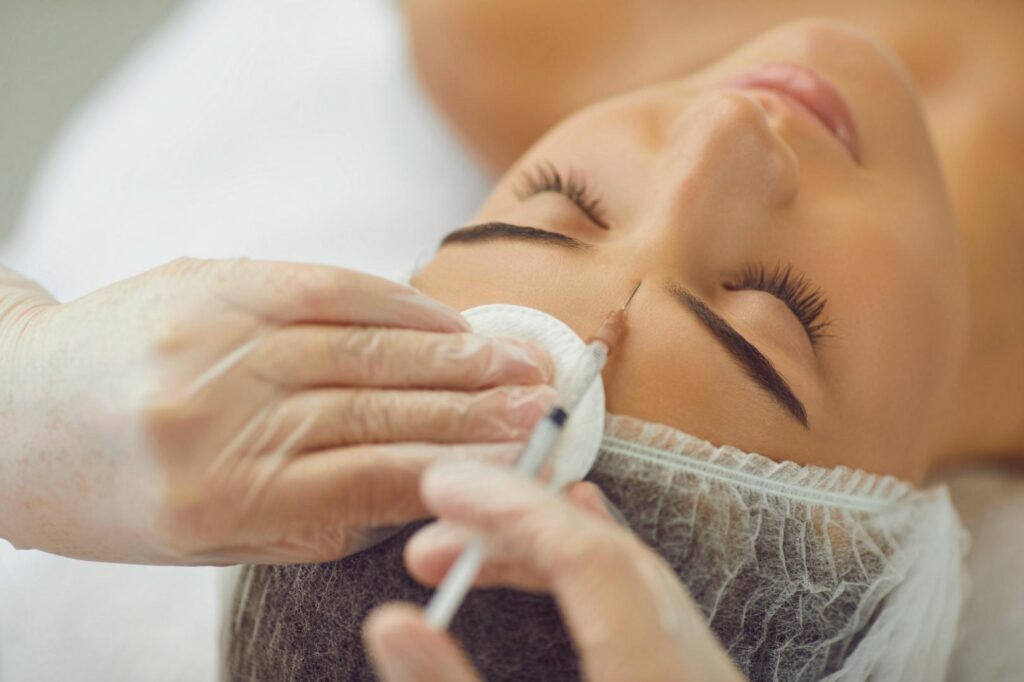
Some wrinkles are most noticeable when you’re concentrating or reacting to a conversation. These dynamic lines form with facial muscle movement. Letybo can temporarily soften moderate to severe frown lines between the eyebrows by reducing the activity of selected muscles.
If you’re weighing a newer name against familiar options, understanding the differences can help. Read on for a practical comparison of how these treatments work, what results may look like, and which questions belong in your consultation.
How the Options Compare
Choosing among new neuromodulator options starts with your treatment goals and health history. The differences below can help you understand what each product offers and what still depends on your individual treatment plan.
1. A Familiar Mechanism
Letybo belongs to the same broad treatment family as Botox, Dysport, and Xeomin. These injectable medications use botulinum toxin type A to temporarily reduce activity in selected muscles.
Letybo’s active ingredient is letibotulinumtoxinA-wlbg. It blocks the release of a chemical messenger that tells muscles to contract. With less contraction in the treated muscles, the overlying skin folds less strongly when you frown.
Developed in South Korea, Letybo received FDA approval in February 2024. That makes it a relatively recent addition to the U.S. market, with clinical research supporting its approved use.
That approval followed three clinical trials involving 1,271 patients in the efficacy analysis. The studies compared Letybo with placebo and evaluated frown-line improvement. They establish evidence for its approved use, while direct comparisons are needed to examine differences between brands.
Botox uses onabotulinumtoxinA, while Dysport uses abobotulinumtoxinA and Xeomin uses incobotulinumtoxinA. The names identify distinct products. Sharing a treatment family does not make them identical or interchangeable.
When exploring wrinkle treatment alternatives, consider what is causing the concern. Neuromodulators address muscle activity. Lines that remain deeply etched at rest, volume loss, or uneven skin texture may call for a broader discussion about appropriate care.
2. Approved Areas Differ
The clearest distinction in Letybo vs. Botox is the scope of their U.S. cosmetic approvals. Letybo is approved for moderate to severe glabellar lines in adults, meaning the frown lines between the eyebrows.
Botox Cosmetic has additional approved uses for moderate to severe crow’s feet, forehead lines, and platysma bands in the neck. Xeomin also has approval for glabellar, forehead, and crow’s feet lines. These approvals reflect the treatment areas evaluated for each product.
Dysport’s cosmetic indication covers moderate to severe glabellar lines in adults younger than 65. Details such as treatment area and age therefore belong in a meaningful comparison.
Using Letybo for forehead lines or crow’s feet is off-label in the United States. That means the use falls outside its FDA-approved labeling. If your provider recommends an off-label application, ask about the rationale, evidence, risks, and alternatives.
3. Formulas Have Differences
A useful botulinum toxin comparison looks at the actual formulation. Product descriptions such as “refined” or “advanced” need context before they can guide a medical decision.
Letybo contains its active toxin along with human albumin and sodium chloride. Botox Cosmetic uses those same two inactive ingredients, although the products are manufactured and tested separately. Similar ingredient lists do not establish equal dosing or identical performance.
Xeomin differs because its active neurotoxin is supplied without accessory proteins. Its formulation still contains human albumin and sucrose. That distinction does not make every other product unsuitable or predict which one will work best for you.
Ingredient differences can matter when reviewing allergies and medical history. Tell your provider about previous reactions to injectables, including the product used and what happened afterward.
Dysport provides another example of why details matter. Its labeling rules out treatment for patients with an allergy to cow’s milk protein. This is different from lactose intolerance, so describe the specific reaction rather than simply saying that dairy bothers you.
Korean development is part of Letybo’s background. Whether it suits your face depends on clinical assessment and response, rather than its country of origin alone.
4. Units Need Context
The number of units on a treatment quote can be confusing when you compare brands. Each product has its own potency testing, so its units cannot be treated as a universal measurement.
Letybo and Botox Cosmetic both have a labeled glabellar regimen totaling 20 units. Dysport’s labeled regimen totals 50 units. Those numbers do not mean Dysport is weaker, nor do they provide an automatic conversion rule.
Your provider should choose dosing according to the specific product and treatment plan. Bringing records of previous injections helps them understand what you received and how you responded.
This also affects cost comparisons. A lower price per unit may not translate into a lower total treatment cost. Ask which areas are included, what follow-up is offered, and what the full visit will cost.
A clear quote helps you compare complete plans. It also gives you space to discuss priorities before deciding whether to proceed.
5. Early Changes Take Shape
Letybo results may begin appearing within the first few days. The timing varies, and the earliest softening is only one stage of the response.
In a phase 3 study, the median onset was three days. This measured a patient-reported improvement in frown-line severity. It did not mean every patient had reached their fullest result by that point.
The main efficacy assessment in the studies supporting FDA approval took place at four weeks. Your provider can explain when to expect a useful follow-up assessment and how to judge the treatment as it settles.
Established neuromodulators also develop their effects over time. Letybo’s early-onset data do not establish that it will work faster than Botox for every patient.
If you have an event coming up, mention the date before scheduling. Allow time for the response to develop and for possible bruising to fade. Trying a new product immediately before an important occasion leaves little opportunity to assess your individual experience.
6. Duration Is Individual
The question “How long does Letybo last?” is best answered with a range and a plan for reassessment. The manufacturer describes effects lasting up to four months, while individual responses vary.
In one phase 3 study, the average time until retreatment was about 127 days. That is a treatment interval, rather than proof that everyone remains equally smooth for that entire period.
Many established neuromodulators are also used in treatment cycles lasting several months. Your own experience provides useful information about when movement returns and how long the improvement feels worthwhile to you.
Keep notes about your treatment date and when you first notice changes wearing off. Share whether the lines returned gradually or whether particular expressions became stronger sooner than expected.
Letybo should not be administered more frequently than every three months. A follow-up conversation can help you understand an unexpected response without automatically leading to another injection.
There is no need to judge success against a friend’s schedule. Your plan should reflect your response and the product’s treatment guidance.
7. Results Depend on the Plan
Patients asking “Is Letybo better than Botox?” deserve an answer grounded in evidence. A newer product can be a useful option without being the best fit for every person.
A randomized study involving 500 patients in China directly compared letibotulinum toxin A with onabotulinumtoxinA. It found comparable improvement in glabellar wrinkles at four weeks under the study’s conditions. The findings support another effective option, but they do not establish universal superiority.
For a natural-looking result, the provider considers your facial movement, muscle strength, and existing asymmetry. Dose and placement help shape how much movement remains. No brand can guarantee a particular expression or promise that an unwanted result is impossible.
During the assessment, your provider may ask you to frown, raise your eyebrows, and relax your face. Watching those changes helps them understand your movement patterns. You can also point out any heaviness or uneven movement that you already notice, giving the discussion a more useful starting point. Baseline photographs help document your starting appearance for later comparisons.
Describe what you want in everyday terms. You might want softer frown lines while keeping movement that feels familiar. Specific goals are easier to discuss than a general request to look younger.
If a previous product worked well, explain what you liked about it. If it didn’t, discuss the timing, dose, and outcome before assuming a different brand will solve the problem.

8. Safety Remains Essential
Letybo side effects overlap with those associated with other botulinum toxin treatments. Possible reactions include headache, bruising, swelling, discomfort, and unwanted brow or eyelid drooping.
You should not receive Letybo if you have an allergy to a botulinum toxin preparation or one of its ingredients. An infection at the intended injection site also rules out treatment at that time.
Review neuromuscular conditions, breathing or swallowing difficulties, and previous facial procedures during your consultation. Share all medications and supplements, along with the name and date of any recent toxin treatment. Pregnancy and breastfeeding require discussion because safety information is limited.
All botulinum toxin products carry a boxed warning about effects spreading beyond the injection area. Seek immediate medical attention if you develop difficulty breathing, swallowing, or speaking after treatment.
Comparing side-effect percentages from unrelated studies can be misleading. The studies may involve different patients, doses, and methods of recording symptoms. Your provider can discuss risks in the context of your own health.
Follow the aftercare instructions you receive and ask how to report concerns. Good communication remains valuable whichever product you choose.
Make the Choice Personal
If your next question is “Where can I get Letybo?” Privvy Modern Health in Chico, CA, offers consultations with a personalized assessment of facial movement and balance. We can discuss your goals, previous treatments, and what Letybo may reasonably achieve.
Book a consultation to compare your options and build a treatment plan that fits your needs!