Sun damage doesn’t always show itself right after the sunny vacations and afternoons spent outdoors. Years later, it may appear as brown spots, fine lines, roughness, enlarged-looking pores, and a complexion that seems less even than it used to. At that point, another brightening serum may not feel like enough.
CO2 laser skin resurfacing takes a more intensive approach by treating damaged skin while triggering a healing response that supports collagen remodeling. RF microneedling can also improve signs of aging and texture, but it gets there differently and generally comes with a different recovery experience.
If you’re weighing the two, keep reading. Understanding CO2 laser vs. microneedling can help you decide which level of treatment makes sense for your skin, schedule, and goals.
Two Paths to Renewal
Before comparing recovery calendars, it helps to understand why these treatments produce different experiences. Both can stimulate collagen, but what they actually do to the skin isn’t the same.
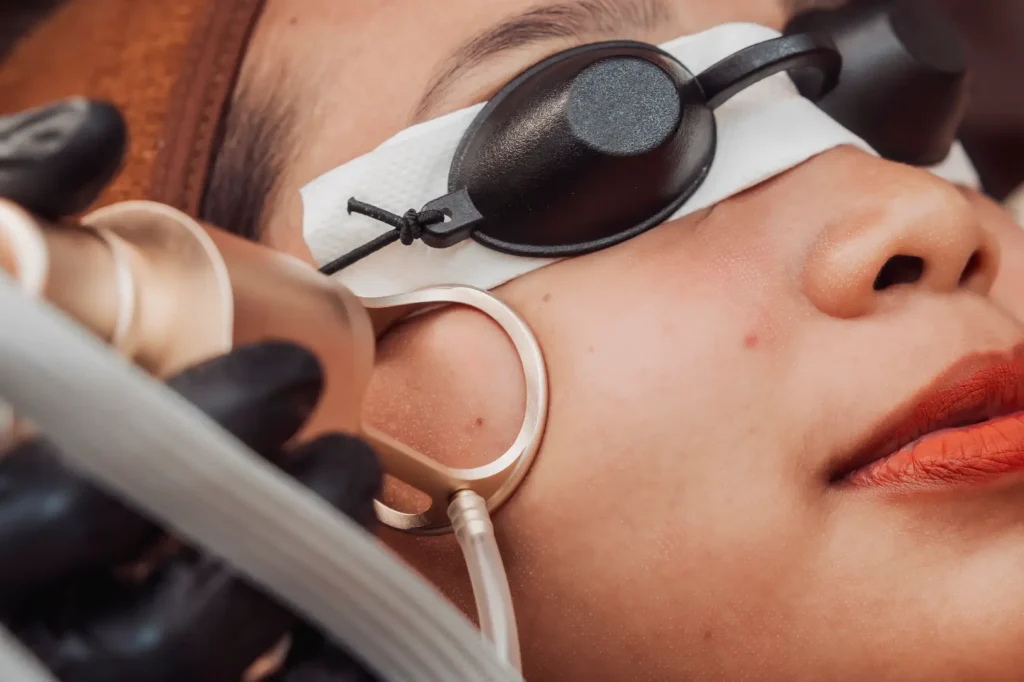
CO2 laser resurfacing uses carbon dioxide laser energy to create controlled thermal injury while removing microscopic portions of damaged skin. Fractional CO2 technology treats columns of tissue while leaving surrounding areas intact, allowing healing to occur between treated zones.
That combination makes CO2 particularly useful when surface damage is part of the problem. Depending on treatment settings, it may address:
- Sun-related discoloration
- Fine lines and wrinkles
- Rough or uneven texture
- Certain acne scars
- Enlarged-looking pores
- Overall signs of photoaging
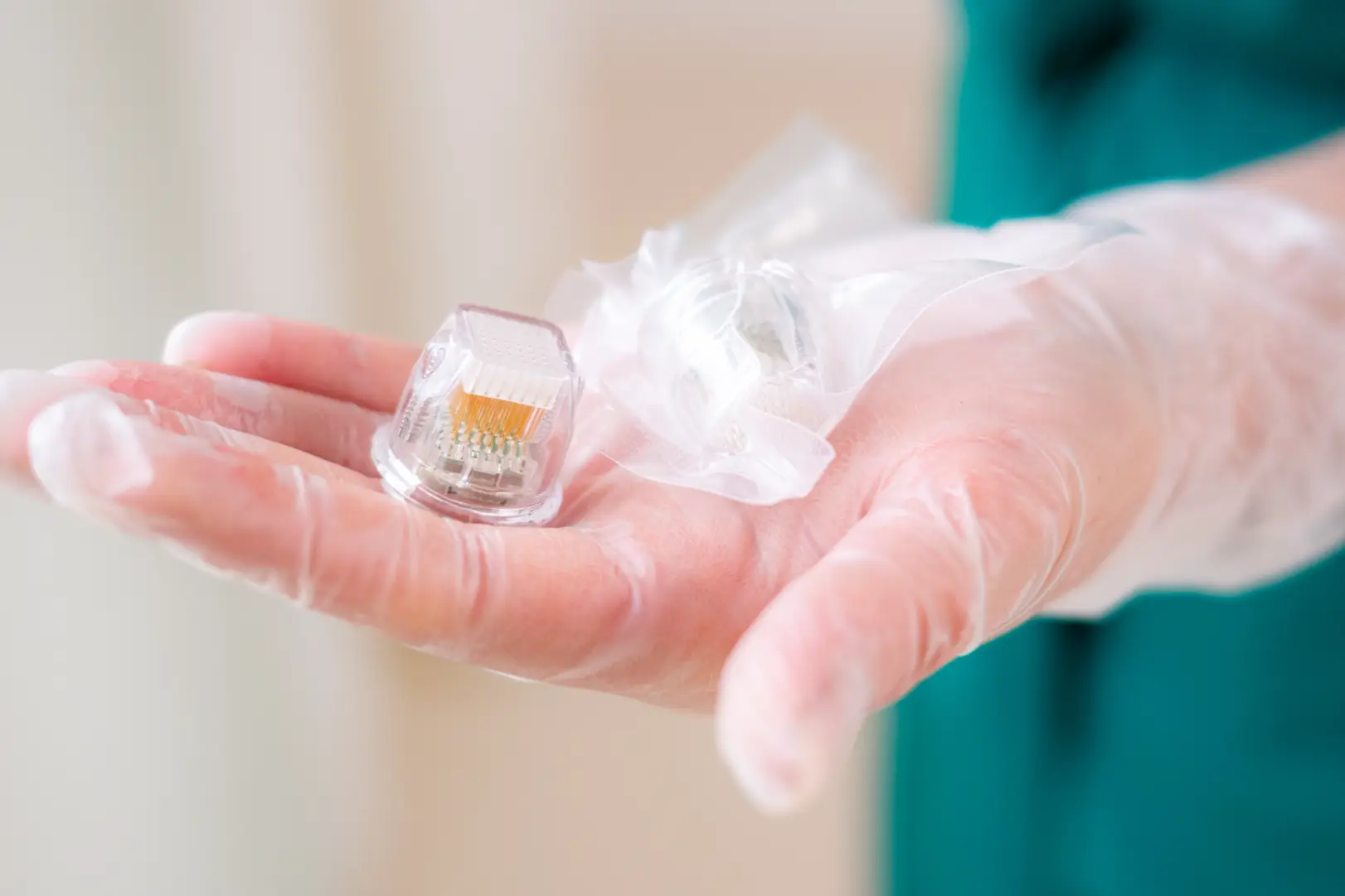
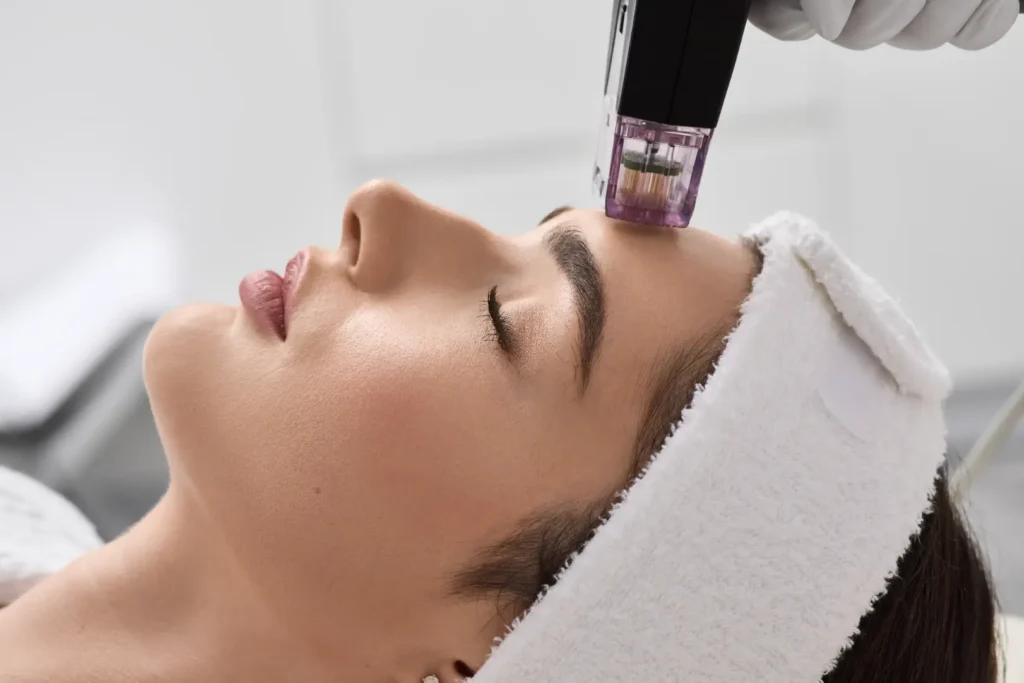
RF microneedling takes another route. Tiny needles enter the skin and deliver radiofrequency energy at controlled depths beneath the surface. The needle injury and RF-generated heat trigger a remodeling response without ablating the surface in the same way as CO2 laser resurfacing.
Neither method is automatically superior. One may simply be better aligned with a particular patient’s concerns.
CO2 Laser vs. RF Microneedling: Downtime and Results
The biggest practical differences become clearer when you compare how each treatment affects the skin, what recovery involves, and the changes each one is designed to create. Here’s what patients should consider before choosing between them.
1. CO2 Works More Directly on Surface Damage
If years of sun exposure are written across the surface of your skin, CO2 laser has an important advantage: resurfacing is literally part of what it does.
The laser removes controlled portions of damaged outer skin while creating thermal effects that stimulate the healing and remodeling process underneath. That makes it particularly relevant for patients dealing with a combination of discoloration, rough texture, lines, and visible photoaging.
CO2 laser results can therefore involve several dimensions of skin quality. As treated skin heals, patients may notice a smoother texture, more even-looking tone, and softening of certain lines and scars.
RF microneedling doesn’t remove damaged surface skin in the same fashion. Its strength lies more in controlled dermal remodeling through needles and radiofrequency energy. This distinction matters when discoloration is a major concern.
Someone primarily bothered by significant sun damage may have a different treatment conversation from someone whose biggest concern is early laxity or textural change.
2. RF Microneedling Works Beneath the Surface
RF microneedling is sometimes described simply as a milder alternative to laser resurfacing, but that’s an oversimplification. It’s a different technology with its own strengths. The needles can deliver RF energy to selected depths beneath the skin. Controlled heating within the dermis stimulates a wound-healing response and collagen remodeling.
As a result, RF microneedling results may include improvement in concerns such as skin texture, acne scarring, fine lines, and mild skin laxity. The ability to adjust needle depth can also help a provider customize treatment for different areas.
Because RF microneedling doesn’t rely on ablating the entire treatment surface, its recovery is typically easier than more intensive CO2 resurfacing. That can make it attractive to patients who want collagen-focused treatment but can’t accommodate a longer visible recovery.
Still, shorter downtime doesn’t automatically mean better treatment. If substantial surface damage is what bothers you most, a resurfacing technology may offer advantages that RF microneedling isn’t designed to duplicate.
3. CO2 Requires More Recovery Planning
Here’s where the lifestyle difference becomes especially noticeable. CO2 laser resurfacing downtime generally requires more planning because the skin needs time to repair itself after an ablative procedure. The exact recovery depends heavily on how aggressively the laser is used.
Fractional treatments can vary considerably in depth and density, so there isn’t one universal recovery schedule for every CO2 procedure. More intensive resurfacing generally means more visible healing.
During early CO2 laser resurfacing recovery, patients can experience redness, swelling, warmth, peeling, crusting, or an appearance similar to a significant sunburn. The skin may require gentle cleansing, prescribed or recommended ointments, careful moisturization, and strict sun avoidance according to post-treatment instructions.
Visible healing may occur over roughly a week or longer after some fractional treatments, while residual pinkness can persist beyond that initial period. More aggressive resurfacing may involve a longer recovery.
This isn’t usually the treatment you schedule immediately before a wedding, presentation, or beach vacation. Recovery is part of the commitment, so your calendar deserves a place in the consultation.
4. RF Microneedling Usually Has Less Downtime
For patients who can’t disappear from their routine for an extended period, RF microneedling downtime is often one of its biggest practical advantages. Redness, mild swelling, sensitivity, pinpoint marks, or a slightly rough texture may occur after treatment.
These effects commonly settle sooner than the visible healing associated with ablative CO2 resurfacing, although individual recovery varies. That can make RF microneedling easier to work around professional and social commitments. But minimal downtime shouldn’t be interpreted as nothing happened to the skin.
Microneedles have created controlled channels, and RF energy has heated targeted tissue. The skin still needs appropriate care afterward. Aggressive exfoliation, unnecessary irritation, and premature use of certain active skincare products may interfere with comfortable recovery.
Your provider’s instructions should determine when you resume products such as retinoids, exfoliating acids, or other potentially irritating actives.
5. CO2 Can Deliver More Intensive Resurfacing
There’s a reason patients accept the longer recovery associated with CO2 laser. The procedure can create a more substantial resurfacing effect than treatments designed primarily around dermal remodeling. For someone with accumulated photoaging, roughness, deeper textural concerns, or certain acne scars, that intensity may be worthwhile.
The tradeoff is straightforward: stronger intervention generally asks more from the skin afterward. This is why a patient shouldn’t choose between CO2 and RF microneedling based exclusively on which procedure has less downtime. If the easier treatment can’t adequately address the concern, convenience may not be the most useful deciding factor.
At the same time, more aggressive treatment isn’t automatically better. Someone with subtle texture changes doesn’t necessarily need the strongest possible resurfacing procedure. The ideal treatment intensity should match the problem rather than exceed it.
6. RF Results Often Build Gradually
Collagen isn’t remodeled overnight, and that’s particularly important when discussing RF microneedling. Although the skin may look refreshed after the initial redness subsides, deeper RF microneedling results generally develop over time as tissue remodeling progresses. Changes may continue becoming apparent over the following weeks and months.
A series of treatments may also be recommended depending on the concern. That makes RF microneedling a process rather than an instant transformation. Patients who understand this timeline are less likely to judge the treatment too early.
CO2 also relies partly on collagen remodeling, so its final result isn’t immediate either. The difference is that resurfacing can produce more obvious surface changes as newly healed skin emerges. Both approaches reward patience, just in different ways.
7. CO2 Results Continue After Healing
Once peeling and early healing have finished, the story isn’t over. Collagen remodeling continues beneath the surface after CO2 laser treatment. This means CO2 laser results can evolve for months.
Early changes may include smoother-looking skin and improvements in visible surface damage. Gradual remodeling may contribute to continued changes in texture and fine lines. How dramatic those improvements become depends on several factors. Treatment depth, the condition being treated, age, healing response, sun exposure, and skincare habits all matter.
Results also aren’t permanent immunity from aging. Your skin will continue to age, and new UV exposure can create additional damage. Sunscreen and sensible skincare therefore become part of protecting the investment you’ve made in resurfacing. Think of treatment as improving the skin you have today, not freezing it at a particular age.
8. Skin Tone Changes the Conversation
Energy-based treatment should never be chosen without considering skin tone and pigmentation history. This is particularly important with ablative resurfacing. CO2 laser creates controlled inflammation, and inflammation can sometimes trigger pigment changes.
Patients with darker skin tones or a history of post-inflammatory hyperpigmentation may have a greater risk of developing unwanted discoloration after aggressive treatment. That doesn’t reduce candidacy to a simple yes-or-no decision based on complexion.
It means the provider needs to consider skin type, previous pigment reactions, recent sun exposure, medical history, and treatment settings carefully. In some circumstances, another technology or a more conservative strategy may be preferred.
RF microneedling doesn’t depend on melanin absorption in the same way a light-based device does, which can make it an option worth discussing across a broader range of skin tones. Pigment changes are still possible after any procedure that creates inflammation, however.
Personalized assessment remains essential for both treatments.
Choose for Your Skin, Not the Hype
CO2 and RF microneedling both have valuable places in aesthetic medicine, but they aren’t interchangeable. CO2 offers more direct resurfacing for concerns such as sun damage and textural aging, while RF microneedling emphasizes dermal heating and collagen remodeling with generally less visible downtime.
At Privvy Modern Health in Chico, CA, your treatment can begin with the concern rather than the trend. If CO2 laser skin resurfacing fits your skin, goals, and tolerance for recovery, a personalized treatment plan can help you approach resurfacing with realistic expectations and a clear understanding of what comes next.