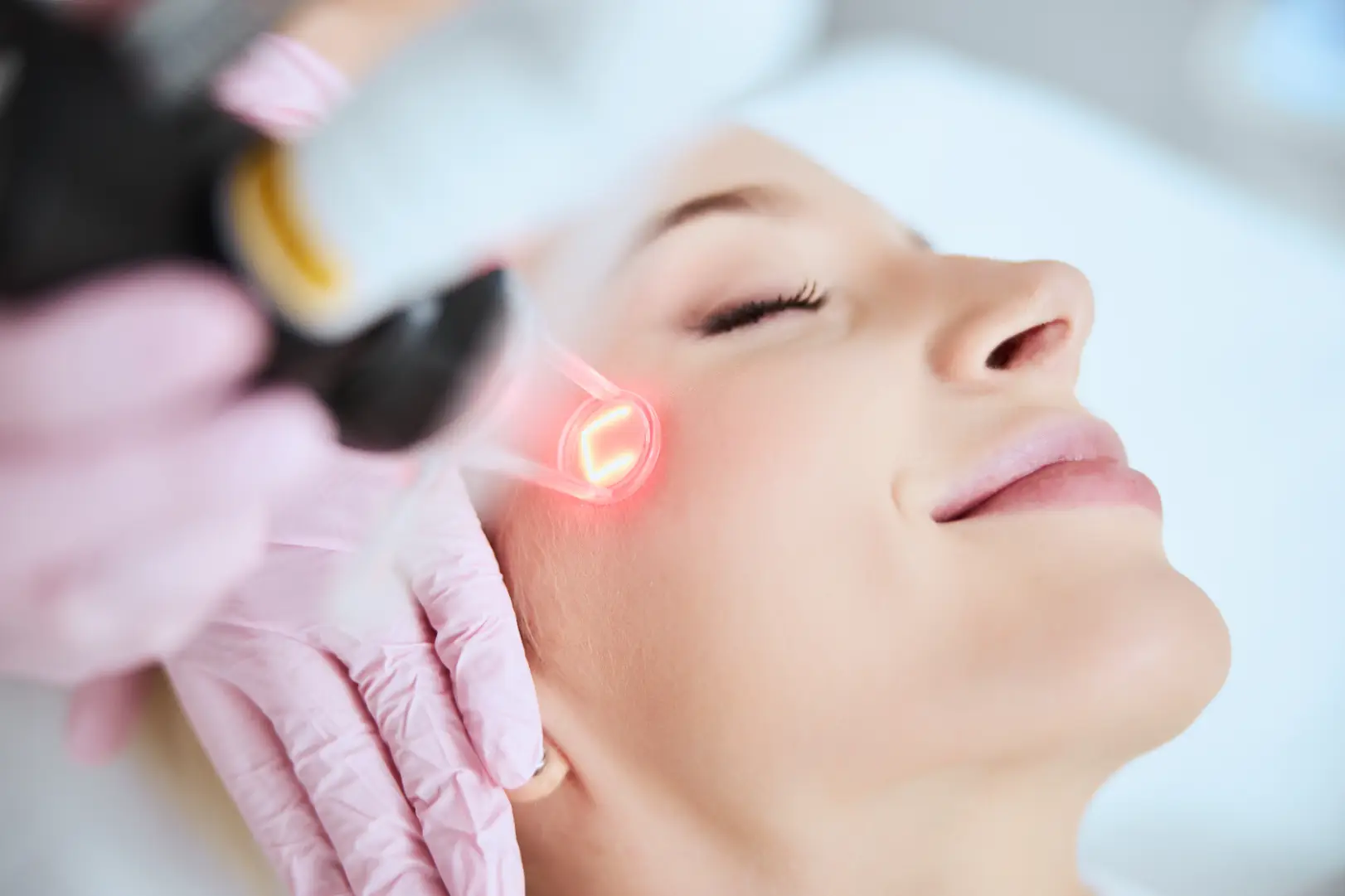
Acne may stop breaking out long before your skin stops telling the story. Indentations can catch the light differently, rough patches can make makeup sit unevenly, and areas that once felt smooth may develop lasting textural changes. When scars extend deeper than the surface, another peel or skincare product may simply be working at the wrong level.
That’s where CO2 laser treatment can become a more clinical conversation. CO2 laser skin resurfacing creates controlled injury in the skin to remove damaged tissue and stimulate a healing response that includes new collagen formation. For appropriate patients, it can improve certain acne scars, uneven texture, wrinkles, and photodamage.
Continue reading to see what physician-run resurfacing involves and why it’s very different from simply booking a stronger facial.
What Physician-Run Resurfacing Involves
Clinical resurfacing isn’t about making skin peel for the sake of peeling. When acne scars and significant texture changes are involved, the process starts with understanding what’s happening beneath the surface and deciding how much treatment the skin can reasonably handle.
1. It Starts With the Scar, Not the Laser
Acne scars don’t all behave the same way, so laser resurfacing for acne scars shouldn’t begin with identical settings for every patient. Some scars are relatively shallow, while others extend deeper or remain tethered to underlying tissue.
That difference affects what CO2 resurfacing can realistically accomplish. A physician can evaluate the type, depth, distribution, and severity of the scarring before deciding whether laser treatment makes sense.
This also prevents every irregularity from being labeled an acne scar. Enlarged-looking pores, active acne, post-inflammatory discoloration, and true atrophic scars may exist on the same face, but they don’t necessarily respond to the same treatment.
For patients researching CO2 laser acne scars, this assessment is an important first step. The goal isn’t simply to resurface everything. It’s to determine which problems the laser can actually improve and which may need a different strategy.
2. Active Acne Gets Its Own Attention
It can be tempting to focus on scars while new breakouts are still appearing, but active acne and established scarring are separate concerns. If acne remains uncontrolled, treating old scars doesn’t stop new ones from developing.
That may change the order of treatment. A physician can assess whether inflammation should be brought under better control before aggressive resurfacing is considered. Active infection, irritated skin, or certain inflammatory conditions can also affect candidacy.
This is one of the distinctions between a medical CO2 laser treatment and an entry-level cosmetic service. The appointment isn’t only about what can be done with the device that day. It also asks whether this is the right time to do it.
Sometimes the most useful treatment decision is to wait. That doesn’t mean the scars are being ignored. It means the skin is being prepared for a treatment that intentionally triggers a healing response, and the starting condition of that skin matters.

3. Scar Depth Shapes the Plan
Think of acne scarring as a landscape rather than a single flat problem. Some depressions are broad and shallow, while others are narrow, sharply defined, or pulled downward by fibrous attachments. A laser can’t treat every part of that landscape equally.
Fractional CO2 laser for acne scars creates microscopic treatment zones within the skin rather than treating every millimeter identically. The controlled injury initiates healing and collagen remodeling while leaving surrounding areas available to support recovery.
For appropriate atrophic scars, that remodeling may gradually soften textural irregularities and make scar edges less noticeable. Still, no responsible treatment plan should promise perfectly smooth skin.
Deep or tethered scars may respond incompletely to laser resurfacing alone. Some patients may eventually need a combination strategy depending on their scar pattern. The purpose of physician assessment is to identify those limitations before expectations get ahead of what the technology can deliver.
4. Treatment Depth Is Deliberate
CO2 laser can sound like one standardized procedure, but treatment intensity can vary substantially. The settings appropriate for mild texture changes may not be appropriate for deeper acne scarring. More energy also isn’t automatically better.
A more aggressive treatment can mean a stronger inflammatory response and a longer recovery period. It may also increase certain risks. The physician therefore has to balance the desired degree of resurfacing with the patient’s skin characteristics, treatment history, goals, and ability to accommodate downtime. This is a central part of physician-run laser resurfacing. Instead of thinking, “How strong can we make this?” the more useful question is, “What level of controlled treatment makes sense for this skin?”
That distinction is especially important when someone has seen dramatic laser transformations online. Another patient’s settings, recovery, and outcome can’t simply be transferred to a different face. Personalization isn’t an optional extra with resurfacing. It’s part of using the technology appropriately.
5. Surface Damage Is Only Half the Story
CO2 resurfacing has two important jobs. It addresses damaged tissue at the surface while also triggering a repair response beneath it. Controlled laser energy creates thermal injury in targeted tissue. As healing follows, collagen remodeling takes place over time.
That second part helps explain why CO2 laser for skin texture isn’t judged only by what happens during the first few days. The initial recovery is the visible part. Skin may look red, swollen, sensitive, or rough depending on treatment intensity. Peeling or crusting can occur as treated tissue heals.
The remodeling process continues beyond that visible phase. Collagen doesn’t rebuild overnight, so texture changes can continue developing after the skin no longer looks freshly treated. This is why patients shouldn’t expect to judge the final result as soon as redness subsides. CO2 resurfacing is a process, not an instant polish.
6. Skin Type Changes the Risk Conversation
Not every patient’s skin responds to inflammation in the same way. Some people are more prone to developing post-inflammatory hyperpigmentation, meaning treated skin can temporarily become darker after an inflammatory procedure. That possibility deserves attention before treatment.
Skin tone, tanning history, previous pigmentation problems, current sun exposure, and past responses to procedures can all be relevant. A physician may modify the treatment approach based on those factors or recommend a different option when the risk-benefit balance isn’t favorable. This doesn’t mean patients with more melanin automatically can’t undergo resurfacing.
It means candidacy and treatment parameters require thoughtful evaluation. Pretending that one protocol works identically across all skin types overlooks an important part of laser medicine. Patients should also be honest about recent sun exposure and upcoming travel.
Freshly treated skin requires careful protection from ultraviolet exposure. If someone’s schedule makes that unrealistic, postponing treatment may be the wiser choice.
7. Your Medical History Matters
A resurfacing consultation should include more than a close look at your pores and scars. Your medical history can reveal factors that affect healing or alter the treatment plan. That may include medications, previous cosmetic procedures, active skin conditions, healing problems, or a history of cold sores.
Laser resurfacing around susceptible areas can potentially reactivate herpes simplex. Patients with a relevant history should discuss it before treatment so the physician can determine whether preventive medication is appropriate. Recent procedures also matter.
The skin doesn’t exist separately from everything else a patient has done to it. Previous lasers, peels, injectables, prescription skincare, or other interventions may influence timing. This broader evaluation is part of what separates clinical resurfacing from treating the skin as though it’s simply a surface that needs exfoliation.
A medical CO2 laser treatment should fit into the patient’s medical and aesthetic history rather than ignore it.
8. Comfort Is Planned, Too
Patients understandably want to know what CO2 resurfacing feels like. The answer depends partly on how deeply the skin is being treated and the areas involved. Comfort management should therefore be discussed before treatment begins.
The physician can explain what sensations to expect during the procedure and what methods are appropriate for the planned treatment. Patients should also understand what the skin may feel like afterward, since warmth, tenderness, tightness, and sensitivity can accompany early recovery. This is another reason to distinguish meaningful resurfacing from a quick lunchtime treatment.
Some lighter procedures are designed around very little interruption to everyday life. More significant CO2 resurfacing may require patients to deliberately create space in their schedules for healing. That isn’t necessarily a drawback.
Downtime is simply part of the treatment equation. The important thing is knowing about it beforehand rather than discovering after the procedure that your skin needs more recovery than your calendar allows.
9. Recovery Is Part of the Procedure
A CO2 appointment doesn’t really end when the laser turns off. The days that follow are part of treatment too. Early recovery varies with treatment intensity, but patients may experience redness, swelling, sensitivity, peeling, crusting, or a sunburn-like sensation.
The skin barrier needs time to recover, so aftercare should be intentionally simple and appropriate for freshly resurfaced skin. This isn’t the moment to experiment with strong acids, scrubs, retinoids, or an elaborate new skincare routine.
Patients should follow the specific post-treatment instructions they receive. Picking or prematurely removing peeling or crusted skin can interfere with healing and may increase the chance of unwanted pigmentation or scarring. Sun protection becomes particularly important as well.
Newly treated skin can be more vulnerable to ultraviolet exposure. Thoughtful recovery therefore involves protecting the skin rather than trying to rush it back to normal. The physician’s role continues here. Follow-up can help assess healing and identify anything that isn’t following the expected course.

Let Your Skin Get the Right Level of Care
Acne scars and persistent texture can be frustrating precisely because they’re deeper than the temporary blemishes that created them. When surface-level care has reached its limits, CO2 laser resurfacing may offer an appropriate next step for selected patients.
At Privvy Modern Health in Chico, CA, physician-run resurfacing brings medical evaluation, individualized treatment planning, controlled CO2 laser treatment, and recovery guidance into the same process. The goal isn’t to chase perfectly filtered skin. It’s to understand your scars, treat them at an appropriate depth, and pursue meaningful improvement with a plan built around your skin.
Contact us today to book your appointment!